(This page is still under construction)
In 1978, my junior year of high school, my family spent eight months in Finland. In lieu of school, my brother Jon and I had research projects for school credit. My research was on Finnish painters. I spent much of that winter in the Helsinki Ateneum, sketching sculptures and taking notes on the tiny watercolors of Hugo Simburg, the giant murals of Akseli Galen-Kallela, and reading The Golden Age of Finnish Art to learn something of the arc of 19th and early 20th century Finnish painting.
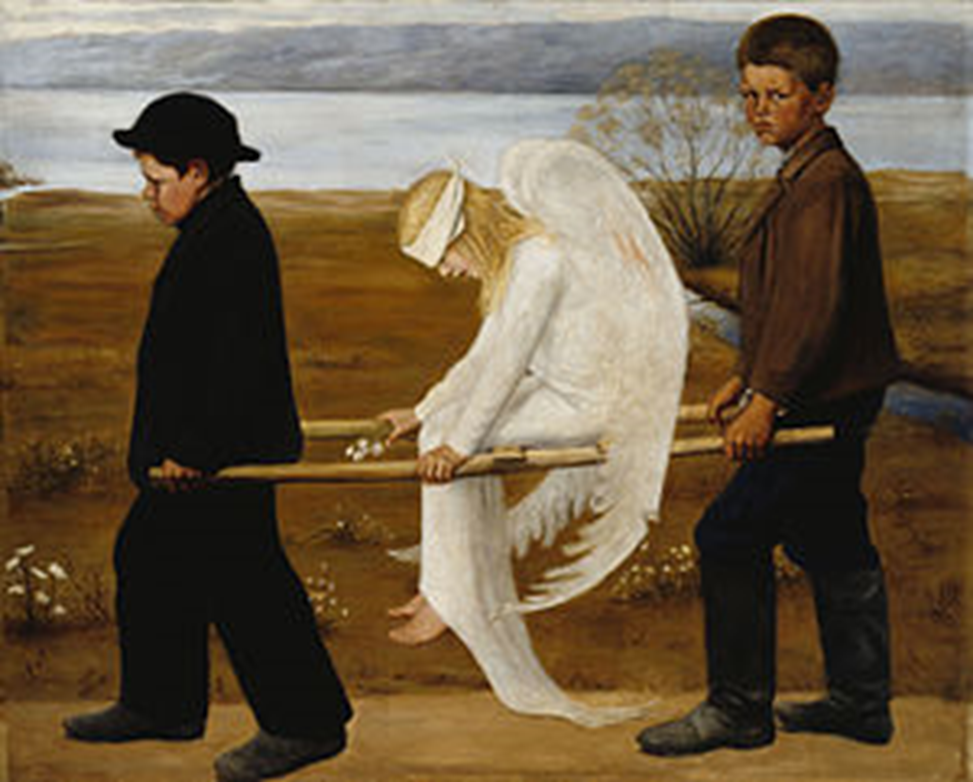
I love Hugo Simburg’s “Fallen Angel,” which we discovered on this trip. The image of the two stoic and unenthralled farm boys carrying the lovely little girl-angel on a stretcher through a field seems to me to be a perfect illustration of a peculiarly Finnish sense of humor: Outrageous understatement, often self-deprecating; with a deadpan approach to wonder.
I studied painting at the University of Connecticut and received a Bachelor’s of Fine Arts degree in 1984. For many years after college I didn’t manage to get much artwork done; in 1993 I decided I really must get my sketching “chops” back (i.e., revive my rusty skills). I bought a bicycle, a little tent and a sleeping bag, and for two months I peddled around Brittany and camped, filling sketchbooks with scenes of houses and fields in the French landscape; these sketches became the subjects of the next few years of painting.
The next year I won a painting studio for a month in Dinan, Brittany; and in 1995 I had my first painting exhibit: at Unity Church Unitarian, in Saint Paul, MN.
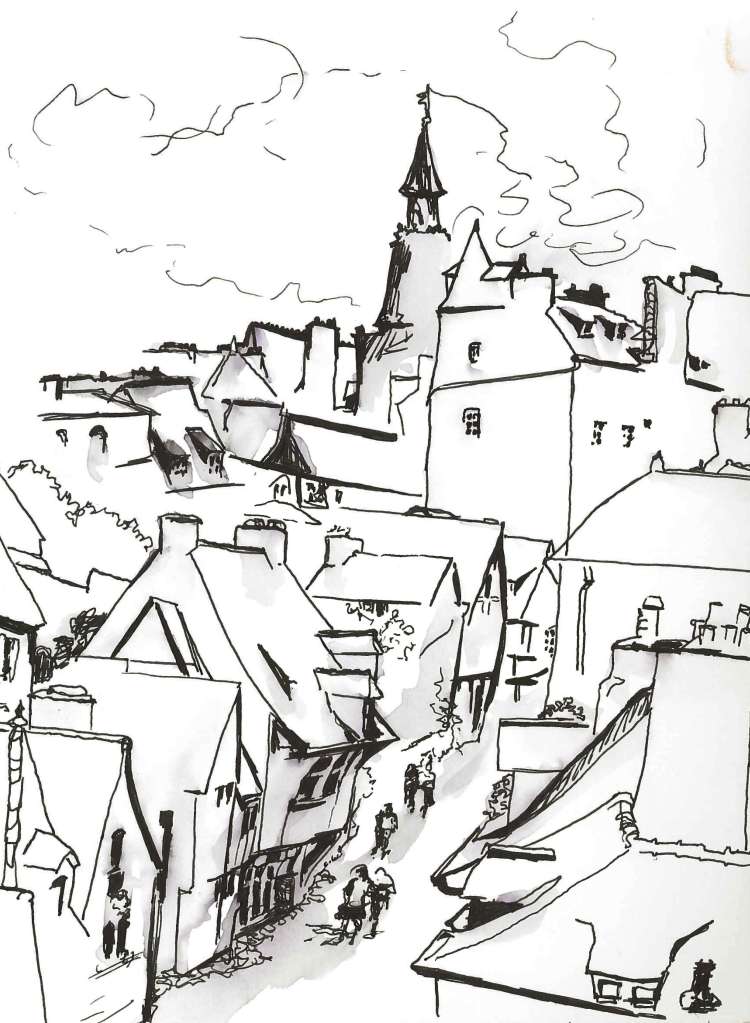
Rue du Jerzual, Dinan, France, sketch 
Dinan Market; blind contour drawing, 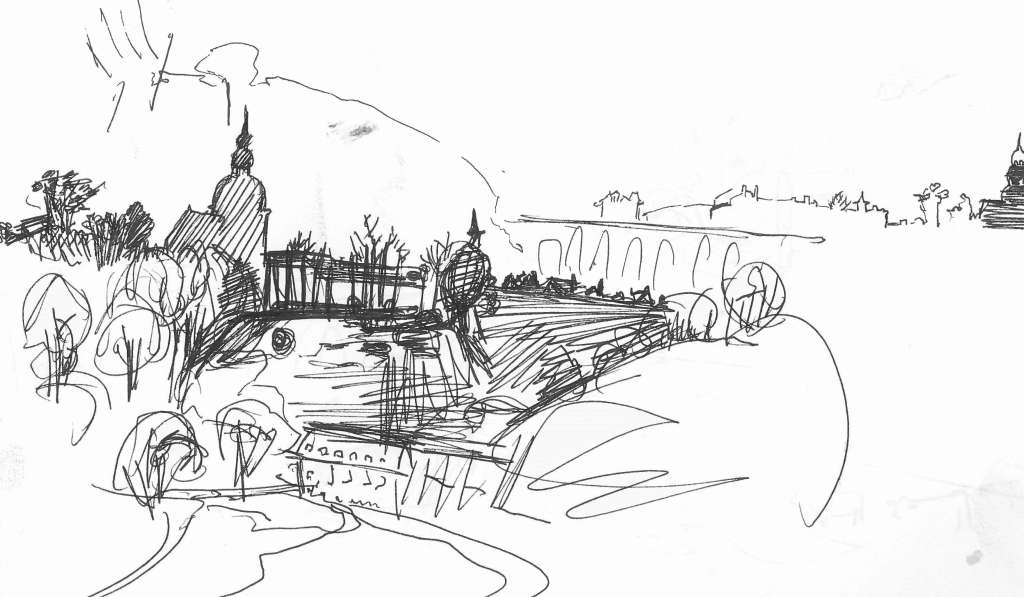
View of the aquaduct and small chapel outside Dinan 
sketch self portrait, 1994 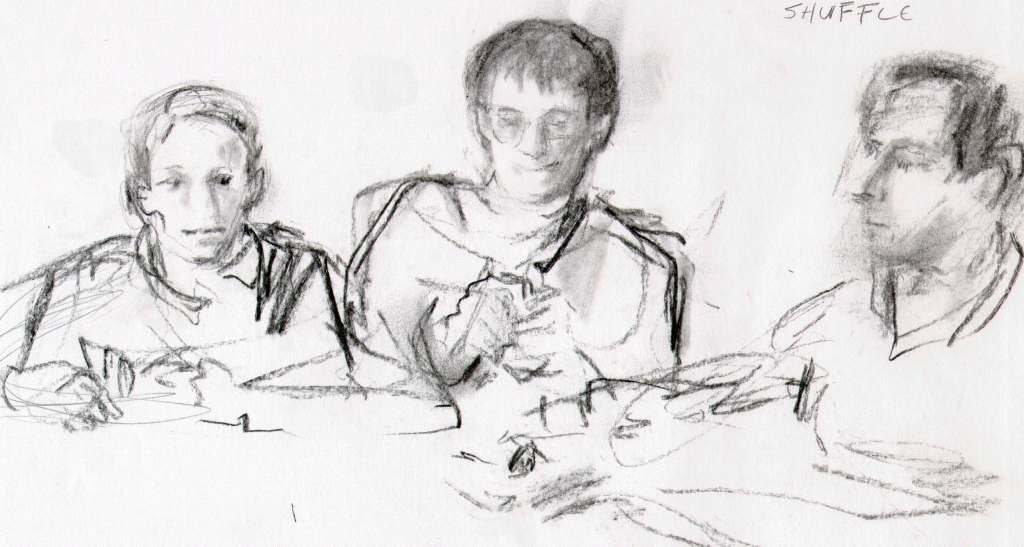
Shuffle (Uno Game in Brittany). pencil sketch, 1994 
Dog at the Chapel Door, blind contour sketch 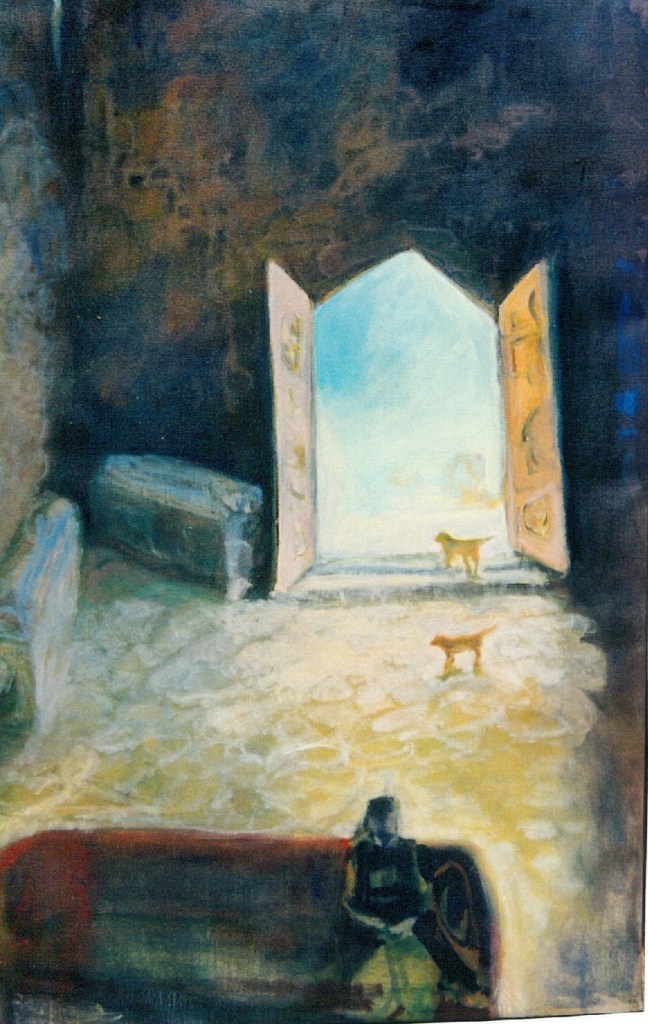
Iago in the Chapel, oil on canvas, 1997 
Dinan Cerulean Shadow, 1997 
Dinan Alley, Oil on canvas, 1997 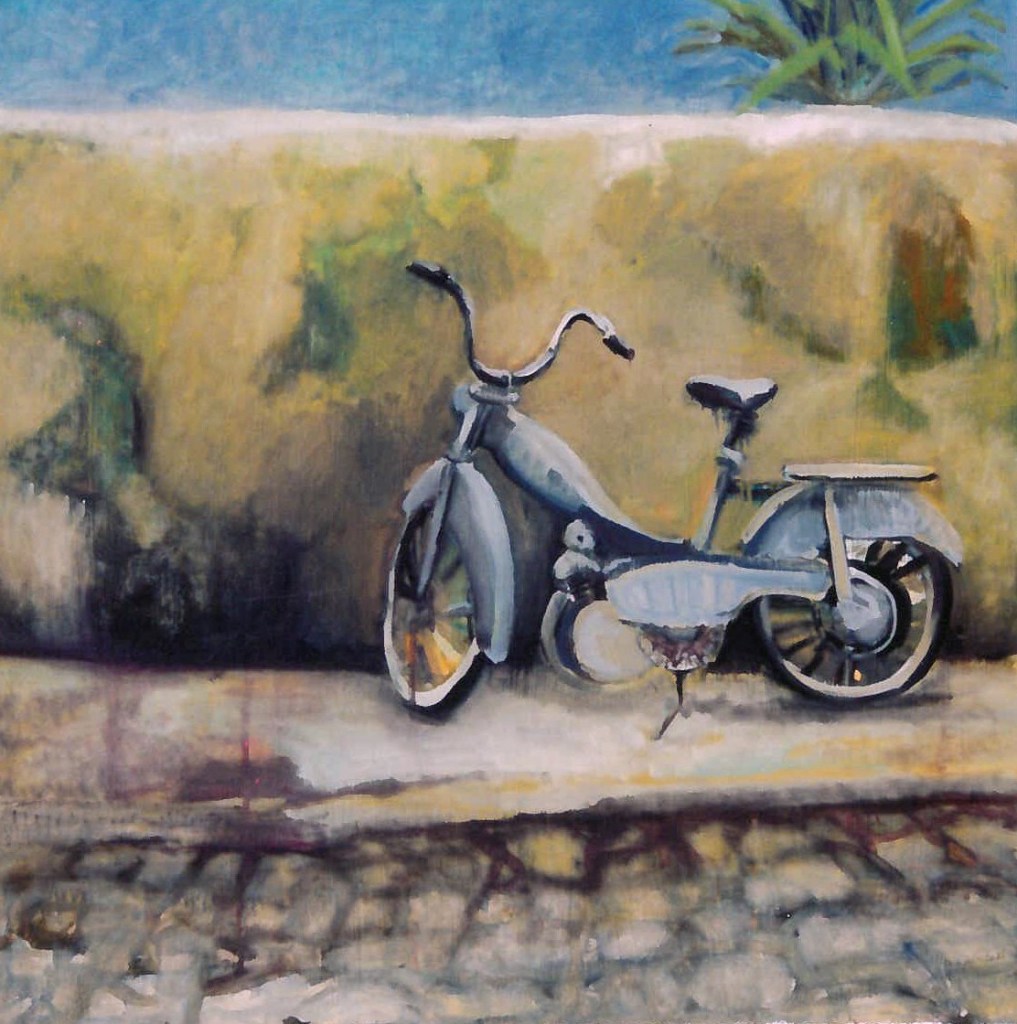
Moped in Dinan Alley, oil on masonite, 1995 
Cobblestone plaza, Dinan, oil on canvas, 1995
This was the start of many years of supporting myself working temporary office jobs and travelling for months at a time, filling sketchbooks, and building series of paintings from those sketches; and then finding some public venue to exhibit the new work.
In 1997 I went to India to visit my father, who lived in Gujarat for 20 years. I sketched in the community, and even got permission from a local group of carpenters to spend a week sketching them as they worked, building furniture out in the street, using their bare feet to support boards and turn C-clamps, using no power tools. In ’98 I exhibited the paintings that came out of the India trip at the Galerie Capt in Geneva.
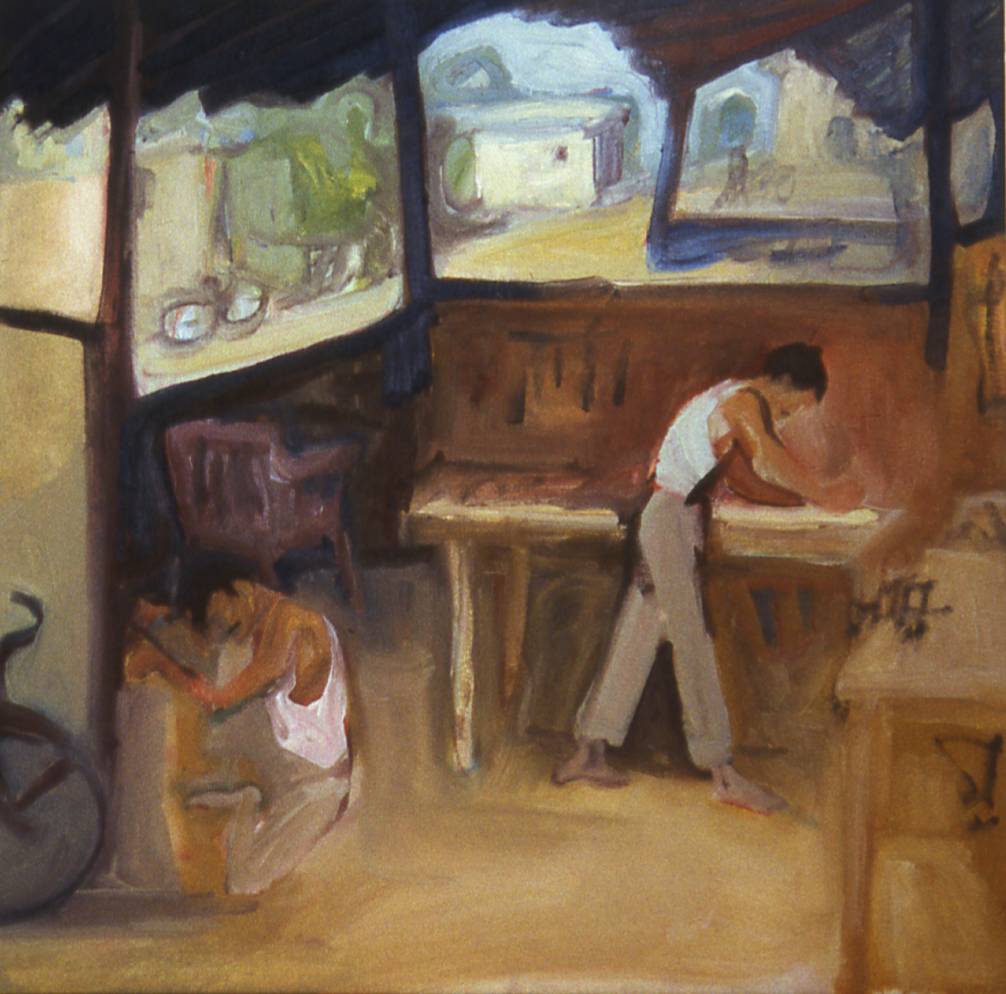
Baroda Carpenters, oil on canvas 
Little Girls in Baroda, oil on sized paper 
Baroda Courtyard, charcoal on paper 
Cow in the Alleyway, oil on canvas 
Kiteflying, oil on canvas 
Thanjur Dwarapalakas, oil on canvas 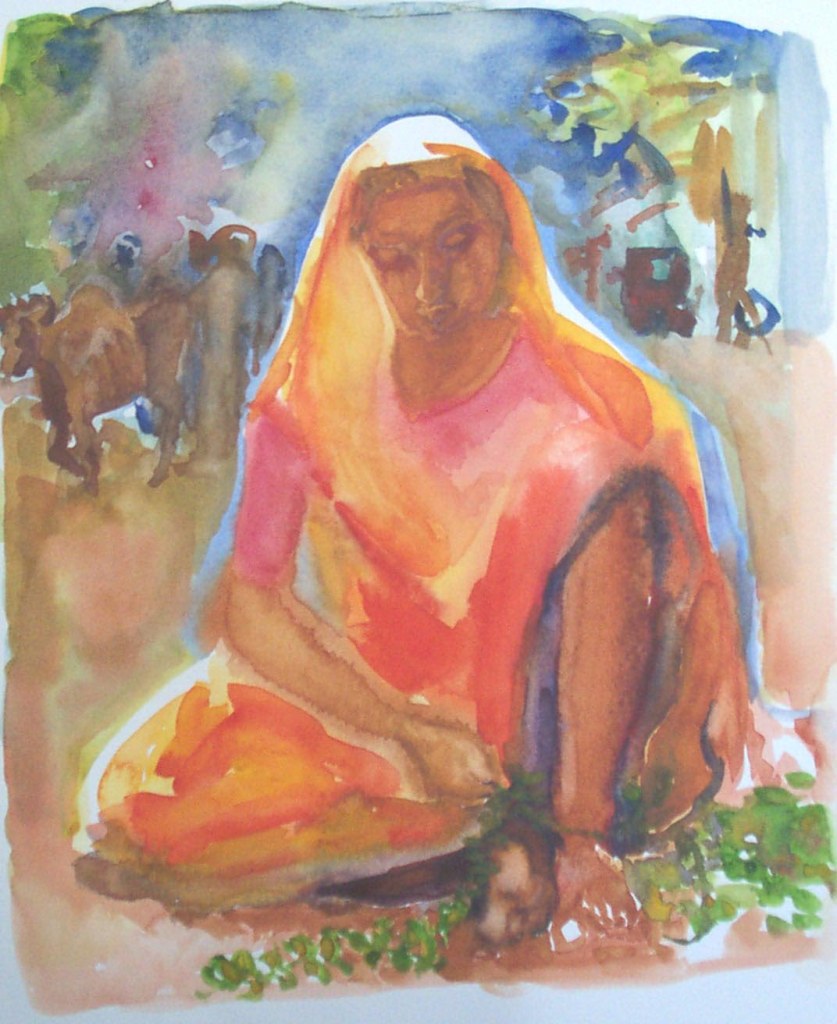
Woman Threading Pan Leaves, watercolor 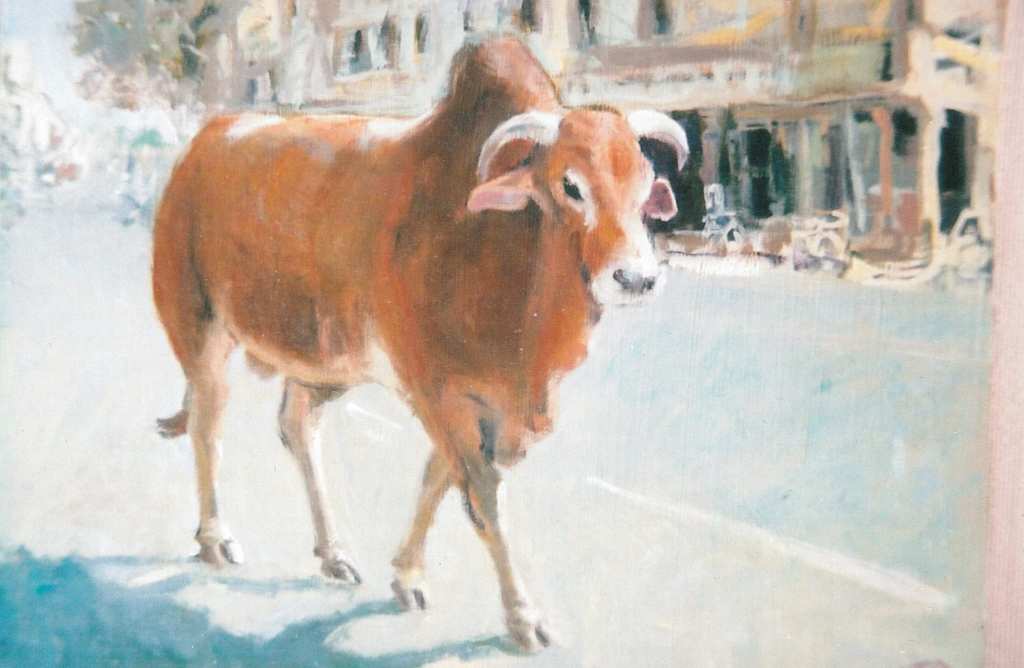
Cow in the Street, oil on panel 
Thanjur Temple, oil on canvas
By 2008 I’d had exhibits in Geneva, Switzerland; Saint Paul and Minneapolis; Storrs, Suffolk and Hartford, CT; and Bainbridge Island, Washington. I’ve occasionally been represented by a gallery, but I have never supported myself as an artist. I’ve always kept to the security of office work rather than venture into harrowing world of the professional artist (I admire you entrepreneurs, you’ve got guts!) I do take my artwork seriously; but with a reasonable amount of humor.

Thompson Gazelles, Oil on Canvas 2010 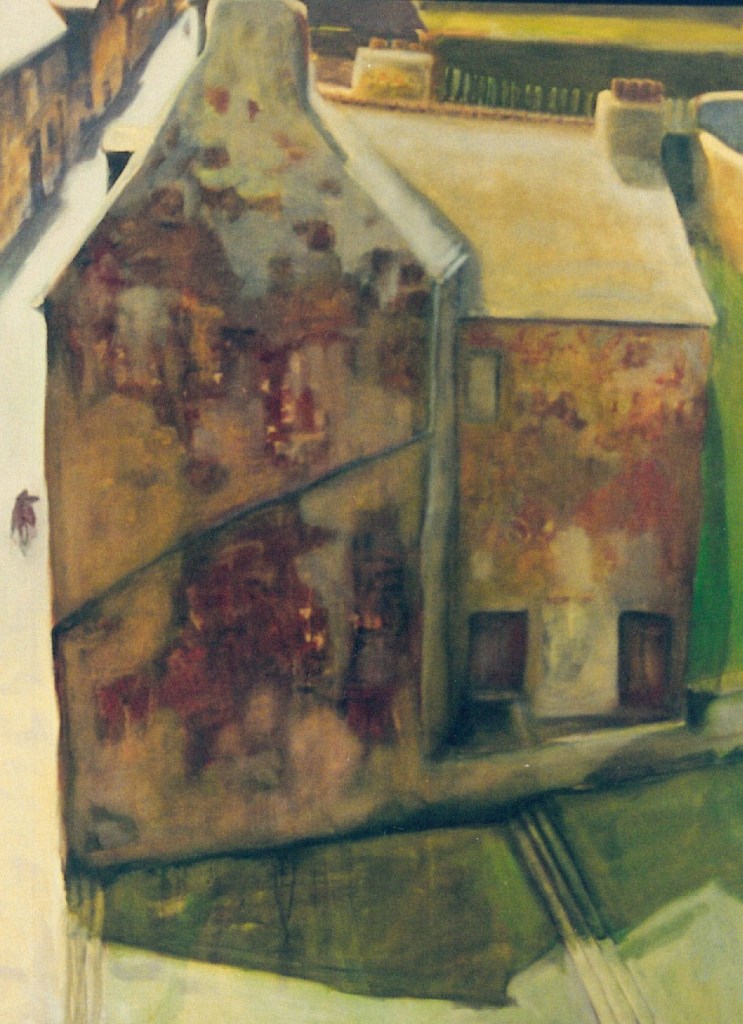
Dinan Wall 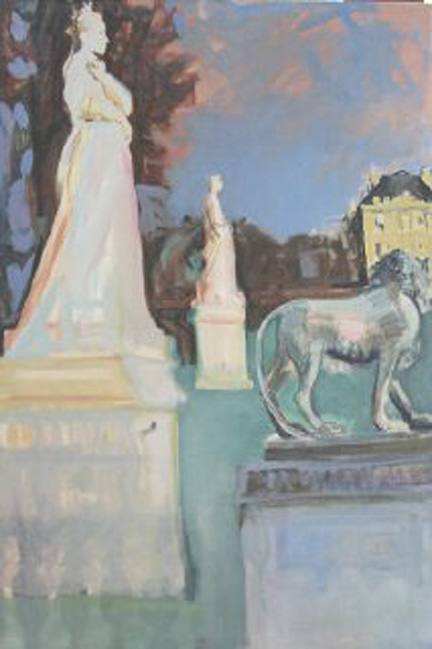
Queens in the Park 
Dwarapalakas 
Jumping Red Angel 
Sportsman’s Club Road 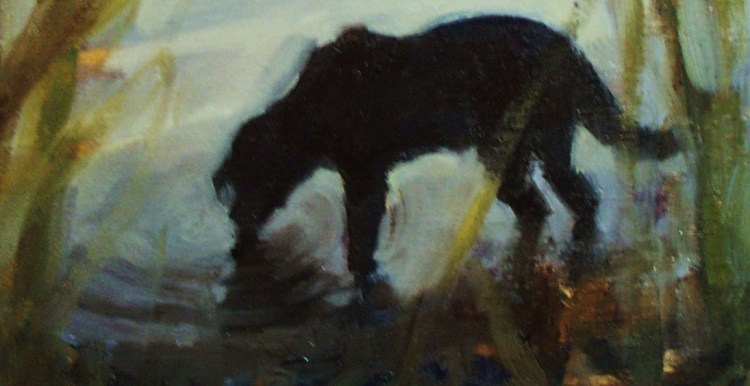
Fritz, oil on wood 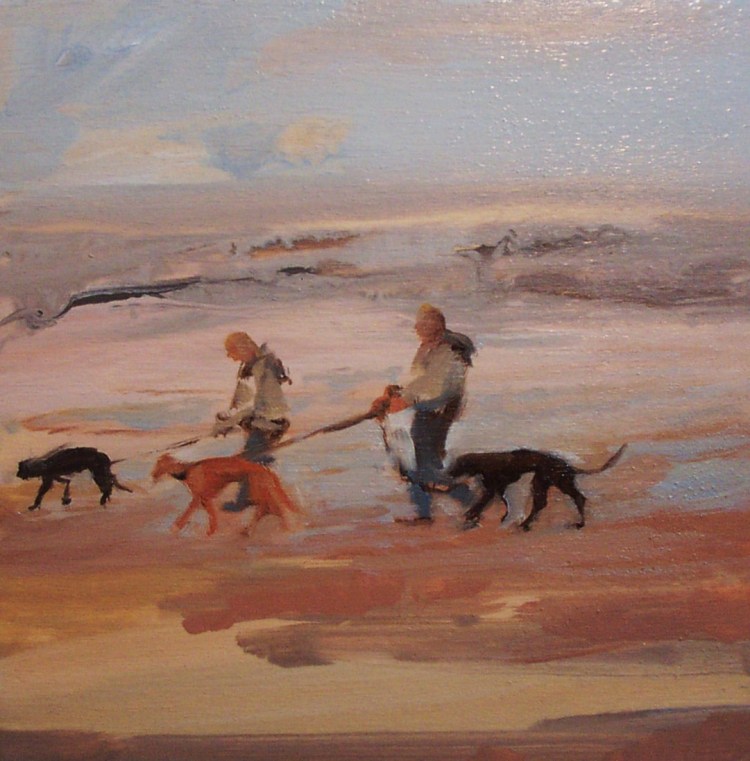
Olympia Beach 
Just Woke Up 
Geneva Chess Club 
Nyon Apartment 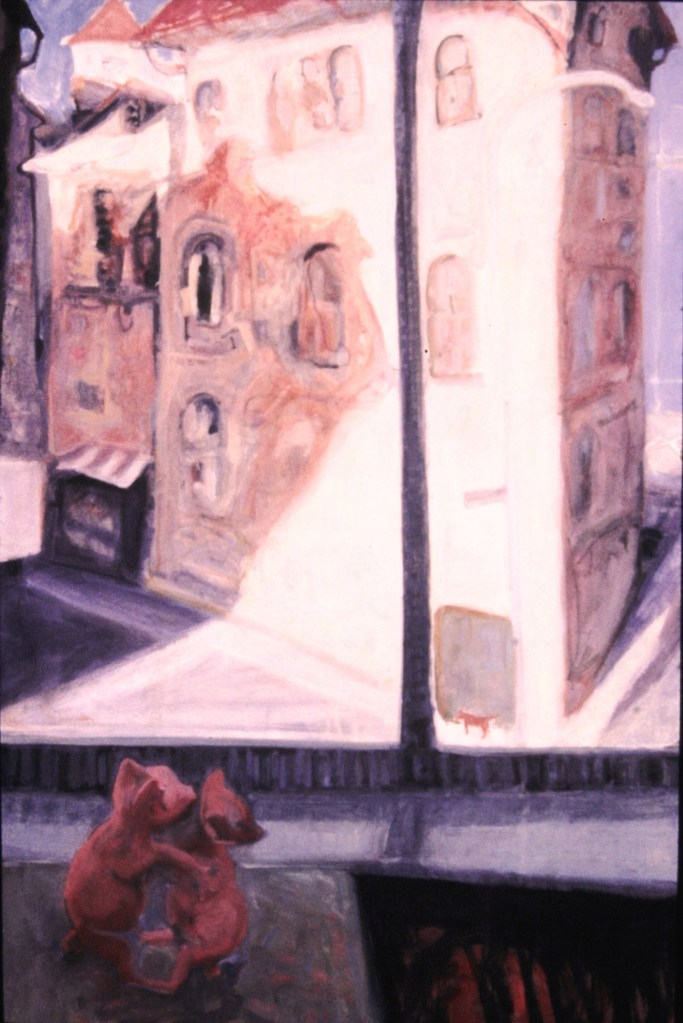
Dancing Dogs 
Dancing Dogs and Bleeding Hearts 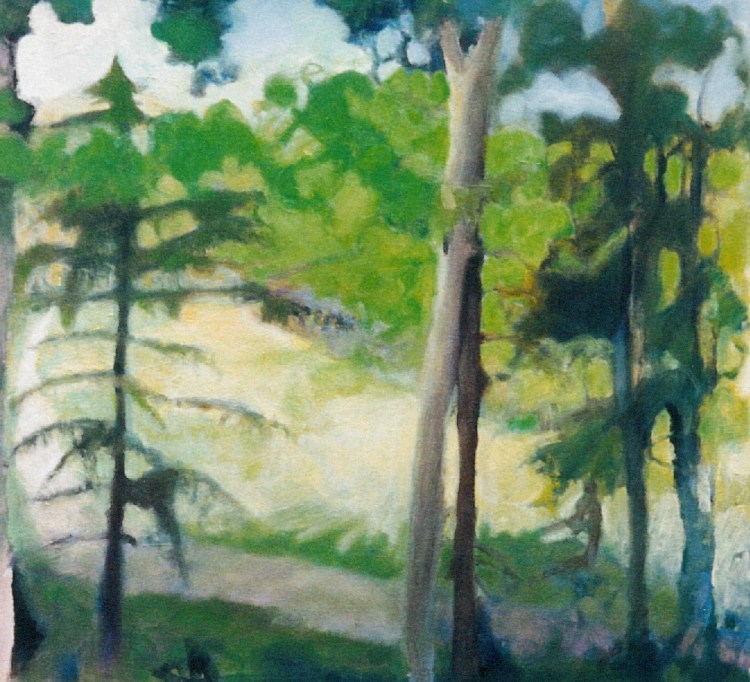
Down to the Road 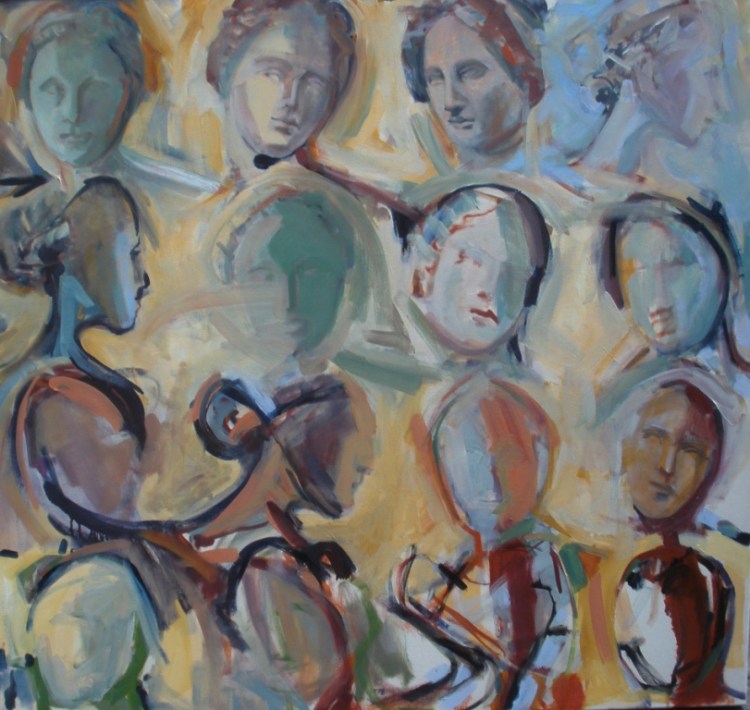
OLYMPUS DIGITAL CAMERA 

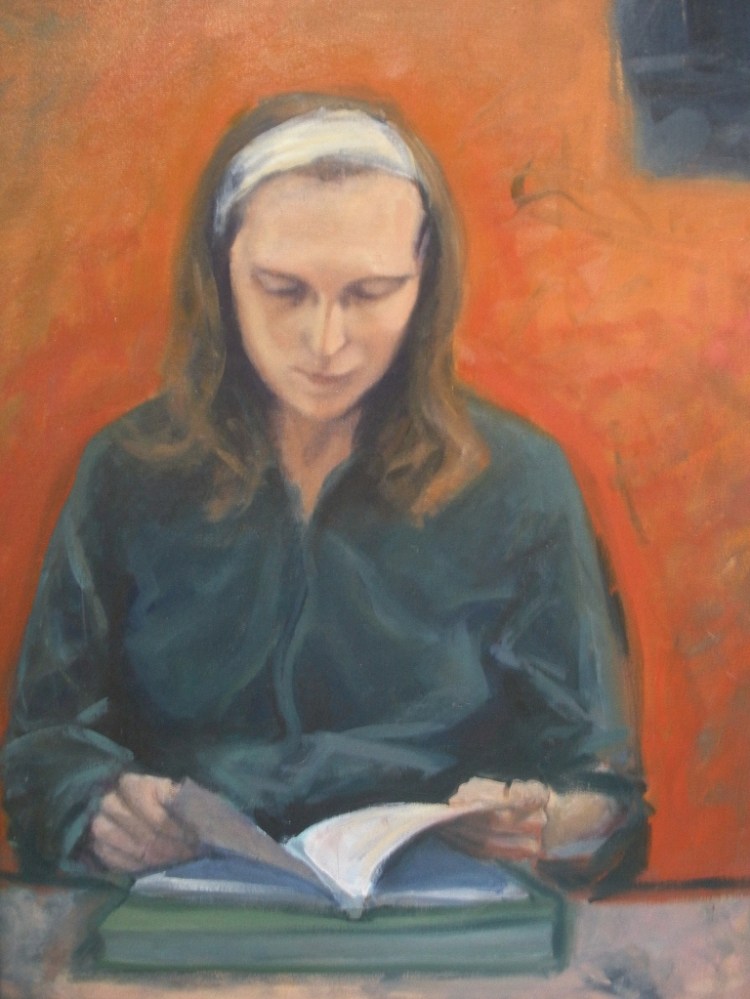
Ann Reading, oil on canvas, 22″ x 18″ 
Saint Paul Cathedral (unfinished) 2017 
OLYMPUS DIGITAL CAMERA 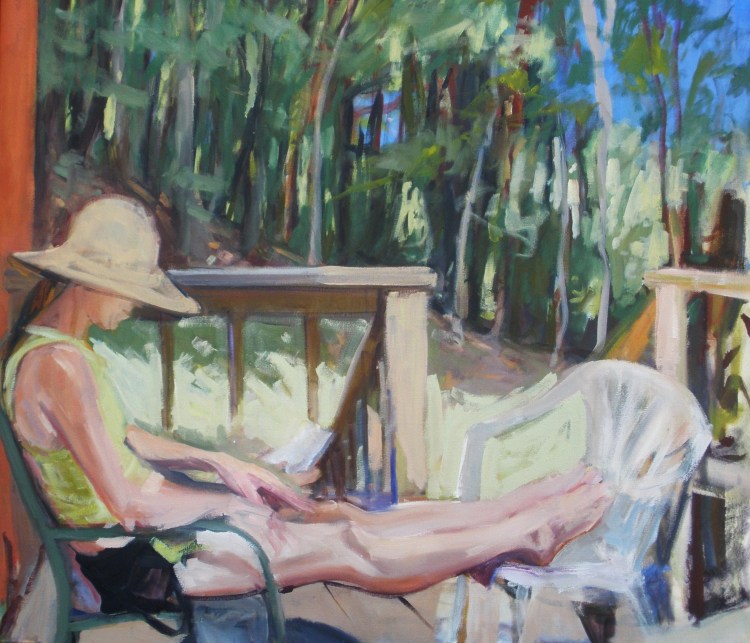
Oil on Canvas 
Painting of a road trip.
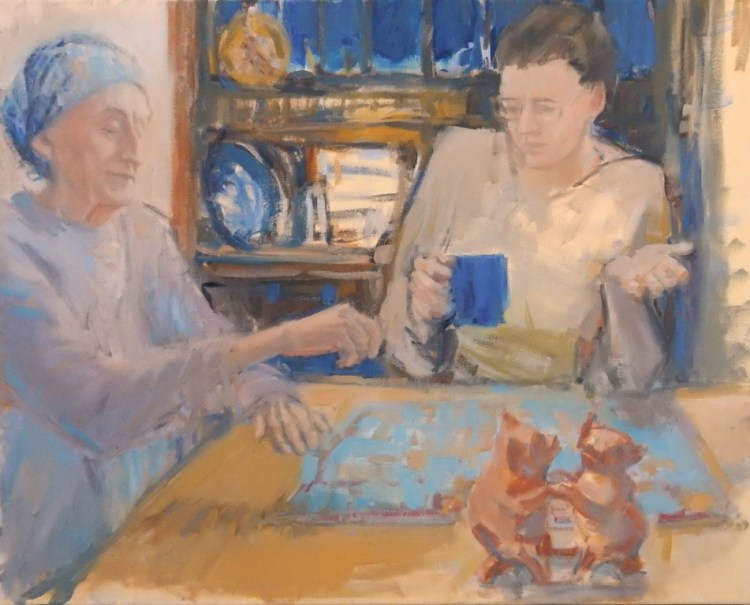
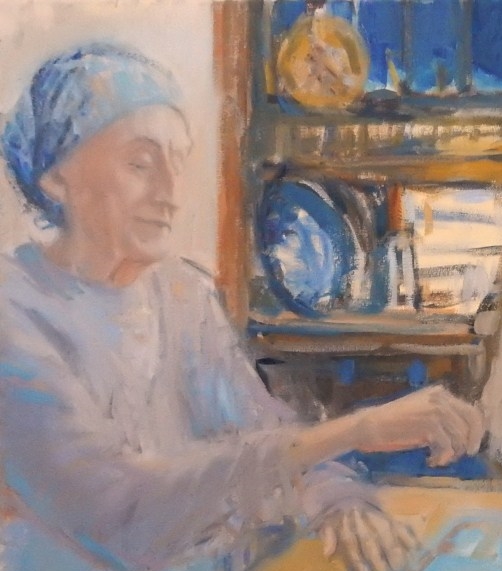
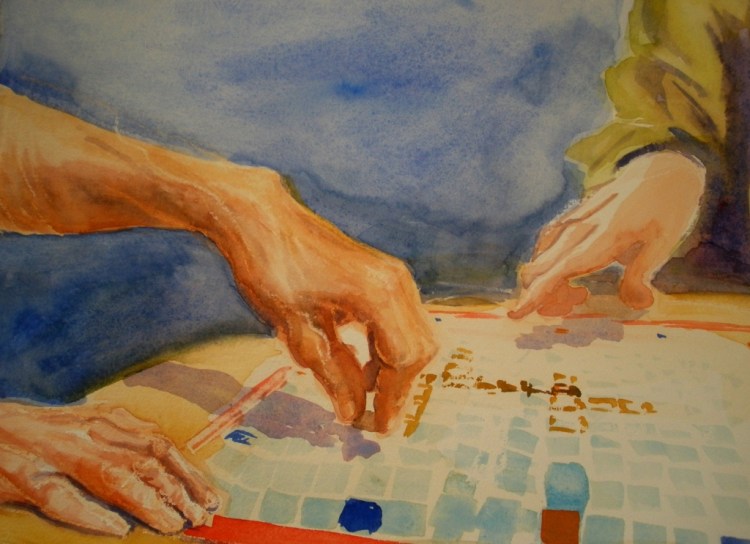
In 2008 I moved back to Saint Paul to care for my mother, who fought a long and excellent battle with cancer (excellent in her approach. “I love breathing,” she said). I did a lot of Mom paintings, honoring her head-on approach to holding onto life. She passed away in 2018, having just celebrated her 90th birthday.
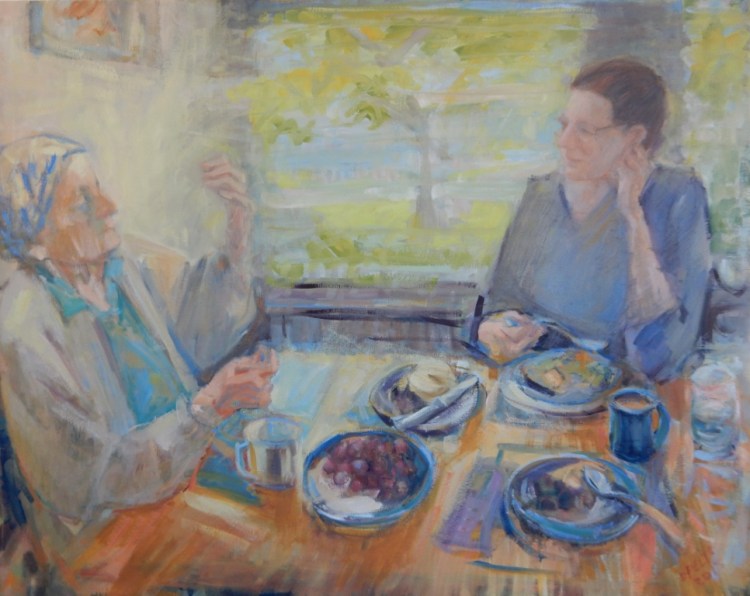


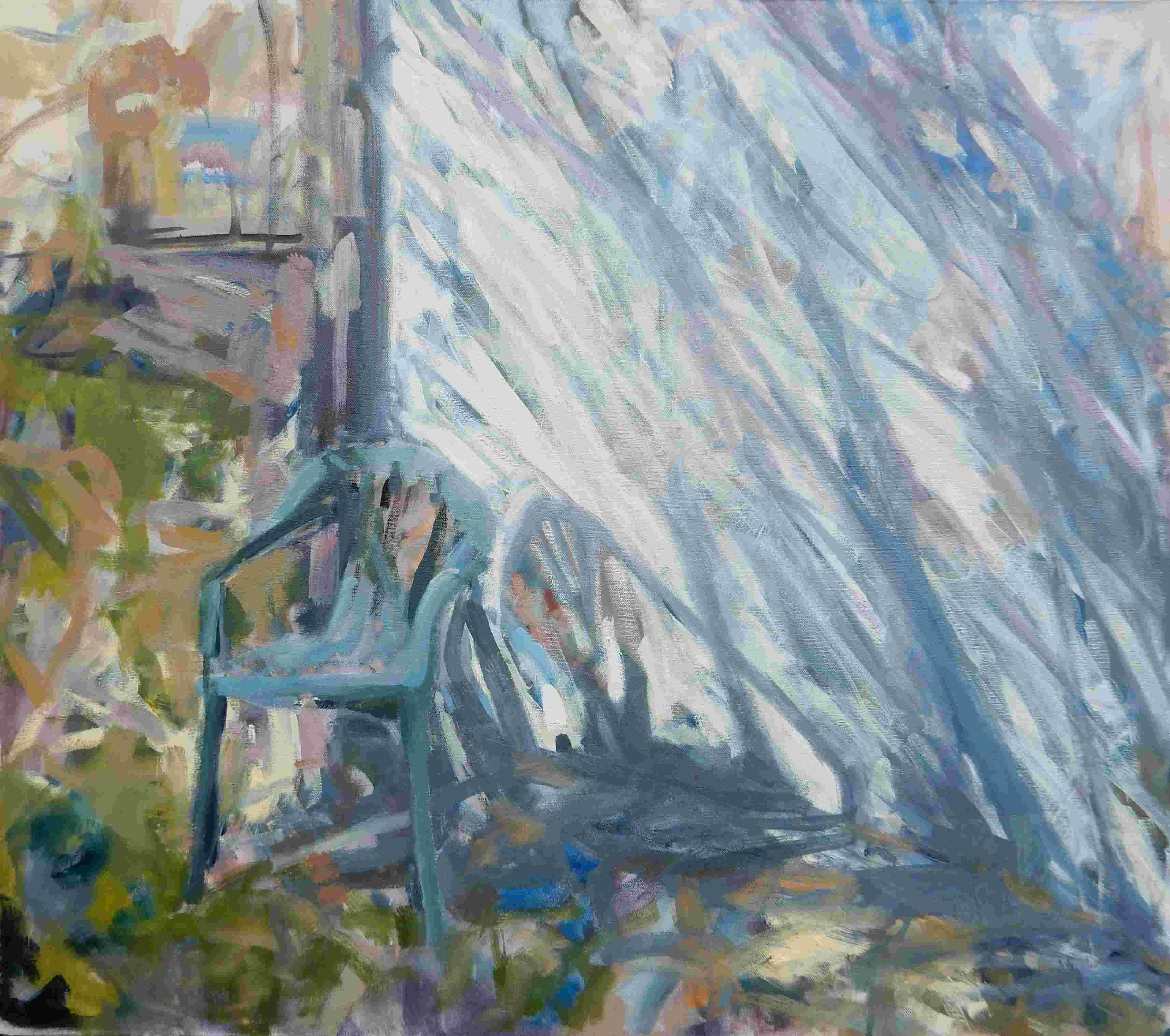
I spent a year packing up her belongings and selling her house in Minnesota, and that chaotic and tangled project also affected my painting. That’s what this scribbled painting of a plastic chair in the driveway represents to me: how beauty filters into the world even when it’s not expected:
I think that the process of looking at the world, and the compulsion to interpret it in a non-verbal form (in sketches or paintings) is probably related to the idea of worship, or the awe we feel when we’re confronted with the ineffable physical world, which is too infinitely complex to ever be fully explained, defined and understood. It’s satisfying to express awe with the wordless language of line and color.
Ideally, my paintings go out into the world and find a home on someone else’s walls. Just like the person who loves to bake, who must then find people interested in consuming the cakes. It’s a delicious problem.
 Dunja Pelto Artwork and Essays